
Rule34 Explained: Meaning, Origin, Sites and Alternatives
Rule34 is one of those internet terms people often encounter long before anyone explains what it actually means. You might see it in a meme, an X post, an anime discussion, a gaming community, or a comment thread and wonder whether Rule34 is a website, an app, an internet rule, or something else entirely.
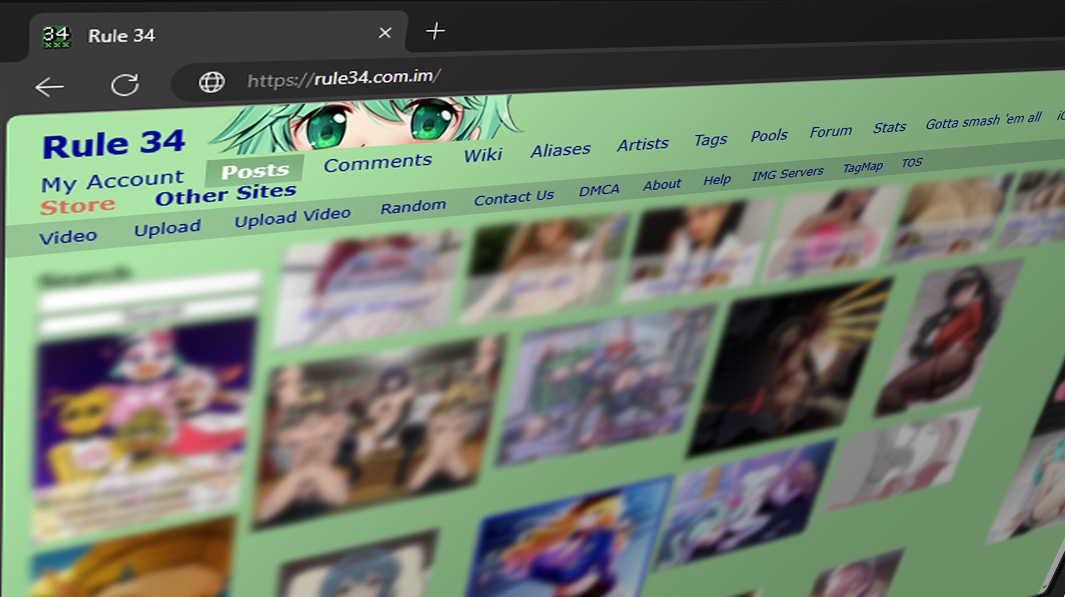
The simplest answer is that Rule34 began as an internet saying rather than one particular website. It refers to the humorous idea that almost any sufficiently recognizable subject can eventually inspire adult-oriented material somewhere online. Over time, the expression became closely associated with fandom communities, image archives, tagging systems, anime culture, memes, and websites that adopted the term in their names.
Understanding that distinction is useful because many searches for Rule34 mix together two different things: the original internet meme and the modern websites that use the same expression.
What Is Rule34?
Rule34, commonly written as Rule 34 or R34, is an informal piece of internet folklore associated with the so-called Rules of the Internet. Its basic meaning is that almost any subject, fictional universe, character, object, trend, or cultural idea can eventually become the subject of adult-oriented fan-created material.
It is not a technical standard, company, organization, or universal online platform. Rule34 is better understood as a long-running internet joke that gradually became part of mainstream online vocabulary.
Today, people use the expression in several different ways. Someone may be talking about the original meme, a general category of fan-created content, a searchable image archive, a tag used by online communities, or simply a joke about how quickly internet users remix popular culture.
This overlap explains why searches such as rule34 meaning, rule34 sites, rule34 online, and rule34 app can lead to very different kinds of information.
What Does Rule34 Mean in Internet Culture?
At its core, Rule34 is exaggerated humor about the enormous scale of online creativity. Once a movie, game, television series, fictional character, mascot, meme, or celebrity becomes widely recognized, communities begin producing their own interpretations around it.
Those interpretations can include illustrations, fan fiction, memes, parody videos, character redesigns, cosplay, animations, game modifications, and countless other forms of remix culture. Rule34 takes that familiar behavior and pushes it to an intentionally extreme conclusion.
Dr. Maya Ellison, fictional digital-culture researcher: “Rule34 survived because it describes user-generated culture rather than one particular technology. Platforms change, but remix culture keeps creating new versions of familiar ideas.”
The expression became memorable because it summarizes a complicated truth about online communities in just a few words: when millions of people can create, publish, tag, and share material, extremely specific interests eventually find an audience.
Where Did Rule34 Come From?
The history of Rule34 is closely connected with early-2000s internet culture. One of the most frequently referenced milestones is a 2003 webcomic created by Peter Morley-Souter, known online as TangoStari. The comic used the phrase “Rule #34” while reacting to unexpectedly adult fan-created material involving familiar fictional subjects.
The wording gradually spread through forums, imageboards, meme communities, chat rooms, and collections of unofficial internet sayings. During the following years, Rule34 became one of the few entries from the broader “Rules of the Internet” concept that escaped its original communities and became widely recognized.
When Was Rule34 Created?
The most practical answer is that the expression became strongly associated with internet culture around 2003, then spread rapidly during the mid-2000s. Similar ideas may have circulated earlier, but the numbered phrase helped transform the concept into a recognizable meme.
That is also why the history of Rule34 is difficult to reduce to a single website or forum. Early internet jokes were frequently copied, modified, reposted, and shared without clear ownership.
What Is the Connection Between Rule34 and 4chan?
4chan played an important role in spreading Rule34 terminology, but describing 4chan as the sole origin of Rule34 oversimplifies its history.
Anonymous imageboards were extremely influential during the period when the “Rules of the Internet” were becoming widely known. Users repeatedly shared and modified humorous lists describing recurring patterns of online behavior. Rule34 became one of the most memorable entries.
A more accurate description is that 4chan and similar imageboard communities helped amplify the expression. The phrase eventually moved far beyond those communities and appeared across forums, social networks, fandom sites, meme pages, and mainstream discussions about internet culture.
Is Rule34 an Internet Rule?
Yes, but only in a humorous cultural sense.
The so-called Rules of the Internet were never an official set of regulations. They were a constantly changing collection of jokes, observations, memes, and community sayings. Different websites sometimes displayed different versions, numbering systems, or wording.
Rule34 simply became unusually memorable.
Think of it as an old internet proverb rather than a formal rule. Nobody manages it, nobody enforces it, and there is no central organization controlling its meaning.
How Does Rule34 Work?
This question often creates confusion because the original Rule34 idea does not function like an online service. When people ask how Rule34 works, they are usually asking how websites associated with the term organize and display content.
Many such sites use a structure inspired by booru-style image databases. Instead of organizing everything through traditional discussion threads, a booru relies heavily on searchable tags.
A post might contain tags identifying a franchise, fictional character, creator, visual style, content category, or other descriptive information. Users can then combine tags to narrow enormous collections into much smaller sets of results.
A typical visit therefore involves searching for a term, refining it with additional tags, applying filters, and opening individual posts to view metadata or related tags.
This database-style approach is one reason searches such as rule34 tags, rule34 search, rule34 booru, and rule34 alternatives are common.
Rule34 vs Booru: What Is the Difference?
Rule34 and booru are often mentioned together, but they mean different things.
| Term | Meaning | Main Purpose |
|---|---|---|
| Rule34 | An internet meme and cultural expression | Describes a recurring form of online remix culture |
| Booru | A tag-based image archive format | Organizes large image collections |
| Imageboard | A platform structured around image posts | Sharing images and discussions |
| Fandom archive | A collection centered around media or communities | Preserving and categorizing fan-created material |
| Tag database | A searchable metadata system | Helping users find specific content quickly |
A Rule34-related website may use a booru system, but a booru does not automatically contain Rule34 material. Many booru-style platforms focus on ordinary illustrations, anime artwork, photography, games, characters, or general fan art.
The defining feature of a booru is usually its tagging architecture, not the subject matter stored inside it.
Why Are Tags So Important on Rule34 Sites?
Large image archives can contain enormous numbers of files, so traditional categories quickly become too broad. Tags solve that problem by attaching descriptive metadata to individual posts.
A well-maintained archive may distinguish character names, franchises, artists, content ratings, visual features, media formats, and alternate spellings. Advanced systems also support tag aliases, exclusions, relationships between tags, and documentation explaining how particular labels should be used.
This makes tagging more than a search convenience. It effectively becomes the navigation system of the entire database.
Jordan Reeves, fictional information-architecture consultant: “A disciplined tag system can make millions of posts easier to navigate than a smaller collection with inconsistent categories. Metadata determines whether an archive feels organized or chaotic.”
Which Rule34 Alternatives Have Better Tag Systems?
People searching for Rule34 alternatives are not always looking for the same type of material. Often they want better navigation, stronger filters, cleaner interfaces, more reliable artist attribution, or more detailed tagging.
When comparing image archives, useful features include character and franchise tags, creator information, tag aliases, rating filters, blocked-tag tools, search exclusions, source metadata, and advanced multi-tag search.
Some well-known booru communities built their reputation largely around careful metadata management. Other art communities focus more heavily on artist profiles, social interaction, portfolios, or chronological feeds.
The best alternative therefore depends on what you actually want. Someone researching illustration may prefer a general art archive, while someone studying fandom metadata may value a highly structured booru database.
Does Rule34 Require an Account?
There is no universal answer because Rule34 is not one centralized service.
Some websites allow visitors to browse most public pages without creating an account. Registration may only become necessary when someone wants to save favorites, upload content, comment, build collections, customize persistent filters, or access additional community features.
Other platforms can apply different requirements.
Therefore, the statement “Rule34 requires registration” is neither universally true nor universally false. The answer depends entirely on the particular website someone is referring to.
Is Rule34 Free?
The Rule34 meme itself is simply a cultural expression, so there is nothing to purchase.
Websites using the term operate independently. Many image archives provide free browsing and support themselves through advertising, donations, community contributions, or optional memberships.
Users should become cautious when an unfamiliar website unexpectedly requests credit-card information, unnecessary personal details, software installation, browser extensions, or permissions unrelated to basic browsing.
A recognizable keyword in a domain name does not automatically tell you who operates the website or how trustworthy it is.
What Is the Official Rule34 Site?
Strictly speaking, there is no universal official Rule34 website representing the original meme.
The expression existed as part of internet culture before numerous websites began incorporating Rule34 into their names. Today, search results can include independent archives, community projects, mirrors, similarly named domains, tools, or other services.
This is why searches such as rule34 official site, rule34 website, and rule34 current website can be misleading.
The first result you encounter should not automatically be treated as the definitive destination. It is better to evaluate each domain individually and pay attention to spelling, browser warnings, redirects, and requested permissions.
What Is the Rule34 App?
There is no single universally recognized Rule34 application tied to the original internet meme.
When people mention a Rule34 app, they may be referring to an independent image browser, a mobile wrapper for a website, a community-developed viewer, a progressive web application, or simply a mobile-friendly version of an existing site.
This distinction matters most when downloadable applications are offered outside established software stores.
If a website claims that installing an unknown application is required merely to view ordinary webpages, that is a good reason to be cautious.
Is Rule34 Safe?
Rule34 itself is only a term. Safety depends on the particular website, its operators, advertising partners, scripts, downloads, and security practices.
Some poorly managed websites can expose visitors to aggressive advertisements, misleading buttons, fake security alerts, unexpected redirects, notification spam, phishing attempts, or suspicious software downloads.
The safest approach is to treat unfamiliar Rule34 sites exactly as you would treat any unknown website. Check the domain carefully, keep browser protection enabled, avoid unnecessary downloads, and do not grant permissions without understanding why they are requested.
Marcus Hale, fictional browser-security analyst: “A recognizable name does not guarantee a recognizable operator. The actual domain, requested permissions, downloads, and browser warnings matter far more than the keyword printed on the page.”
Does Rule34 Have Viruses?
The internet expression Rule34 cannot itself contain malware. However, a particular website, advertisement, third-party application, browser extension, or download can potentially create security problems.
This distinction is important because one bad experience with a particular domain does not prove that every website associated with the same keyword behaves in the same way.
Warning signs include pages that repeatedly open new tabs, request unusual software installations, display frightening security messages, trigger unexpected downloads, or insist that browser protection must be disabled.
Another red flag is a website that claims your device has suddenly detected dozens of threats and demands immediate action. Genuine browser security warnings normally come from the browser or operating system, not from dramatic advertisements embedded in webpages.
Is Rule34 Safe on Mobile?
Mobile devices face many of the same browsing risks as desktop computers. Phones can still encounter phishing pages, deceptive advertisements, suspicious notifications, unwanted downloads, fake applications, and misleading login forms.
Keeping the operating system and browser updated provides an important first layer of protection. Users should also be careful with notification permissions and avoid installing unknown APK packages simply because a webpage recommends them.
Mobile users sometimes assume phones are automatically protected from malicious websites. In reality, mobile browsers contain many security protections precisely because web-based threats can affect phones as well.
Is Rule34 Safe to Download?
Browsing a webpage and installing software are two very different actions.
An image archive normally does not require a separate executable program, media player, download accelerator, browser extension, or system utility simply to display webpages.
Be especially careful with unknown EXE files, APK packages, password-protected archives, extensions, or software offered by publishers you cannot identify.
If installing something is unnecessary for the task you are trying to perform, avoiding the download is usually the simpler and safer option.
How to Use Rule34-Related Sites More Safely
Adults who choose to browse mature-content archives can reduce unnecessary risk by following a few straightforward habits rather than relying on complicated security setups.
- Check the domain carefully. Similar-looking addresses can belong to completely different operators.
- Keep browser protections enabled. Do not turn off warnings simply because a webpage asks you to.
- Avoid unnecessary downloads. Basic image browsing rarely requires installing additional programs.
- Limit website permissions. Consider whether camera, microphone, location, notification, or storage access is genuinely needed.
- Use unique passwords. Never reuse an important work, banking, or primary email password on unfamiliar sites.
- Use filters where available. Content-rating and blocked-tag tools can make browsing more predictable.
Age requirements should also be respected. Adult-oriented platforms are intended for adults, and shared computers or mobile devices should use appropriate filtering when younger family members may have access to the same browser.
Material involving minors in sexual contexts should never be searched for, saved, distributed, or encouraged. If encountered unexpectedly, leave the page and use appropriate reporting channels where available.
Why Is Rule34 Associated With Anime?
Anime, manga, and gaming communities have a long history of producing large amounts of fan-created artwork. These communities were also early adopters of searchable image databases and sophisticated tagging systems.
As booru-style archives became more popular, characters could be organized by series, artist, appearance, franchise, visual features, and many other attributes. This made anime-related artwork particularly easy to search and categorize.
Rule34 therefore became highly visible around anime fandom, but the concept is not limited to Japanese animation.
It can be referenced in discussions involving Western cartoons, video games, films, comics, mascots, internet memes, fantasy franchises, and almost any other recognizable cultural subject.
Why Is Rule34 Mentioned on Twitter or X?
Rule34 frequently appears on X because social networks are major distribution channels for memes, fandom jokes, artwork discussions, game announcements, and viral characters.
A person might mention Rule34 without sharing adult material at all. For example, the expression often appears humorously when a new game character, mascot, animated series, unusual product, or viral meme suddenly becomes popular.
In that context, Rule34 works like cultural shorthand. People who understand the meme immediately understand the joke without needing a long explanation.
What Happened to Rule34?
Nothing happened to Rule34 as an internet concept. The expression continues to circulate because it does not depend on one company, server, application, or domain.
What often changes are the individual websites associated with the keyword.
A particular archive may redesign its interface, move to another domain, experience downtime, modify registration policies, restrict certain regions, change ownership, or disappear completely. Users who associate Rule34 with one specific website may then assume that “Rule34 is gone.”
The broader meme remains independent of those changes.
Are There Safer Rule34 Alternatives?
The word “alternative” can mean several things. Some people want a different image archive, while others simply want better tagging, cleaner navigation, stronger filtering, or a general art community without the same emphasis on mature material.
If your main interest is discovering artwork, general illustration communities, fandom archives, artist portfolio platforms, and safe-rated booru databases can provide similar search functionality.
If your interest is internet history, meme culture, or digital anthropology, reference archives and fandom-history resources are usually more useful than adult-content databases.
If search efficiency is the priority, look for services offering clearly documented tags, artist attribution, rating controls, exclusion filters, and transparent moderation practices.
The key is to choose an alternative based on the feature you need rather than simply selecting another site with a similar name.
Rule34 Is More About Internet Culture Than a Website
Rule34 remains interesting because it reveals something broader about how online communities behave.
The internet allows enormous numbers of people to gather around extremely specific interests. Search engines help people discover those communities, tags organize material, social networks spread jokes, and creative tools make remixing increasingly easy.
The same underlying mechanisms that helped Rule34 spread also powered fan fiction, cosplay, fan art, game modifications, meme culture, collaborative encyclopedias, video remixes, and online archives.
Rule34 is therefore not merely a reference to adult-oriented fan culture. It is also an example of how an obscure internet joke can evolve into a globally recognized piece of digital vocabulary.
Conclusion
Rule34 is best understood as a long-running internet meme rather than a single website or application. The expression gained prominence during early-2000s web culture, spread through forums and imageboards, and eventually became shorthand for the seemingly endless ways online communities reinterpret familiar subjects.
Modern Rule34 sites may use booru-style tagging systems, but their ownership, registration requirements, security practices, interfaces, and content policies can differ considerably.
The most useful distinction to remember is simple: Rule34 is the cultural concept, while websites using the Rule34 name are individual platforms.
If you encounter one of those platforms, evaluate the actual domain, keep browser protection enabled, avoid unnecessary software downloads, use filtering tools, and treat unfamiliar websites with the same caution you would apply anywhere else online.
Frequently Asked Questions About Rule34
What is Rule34?
Rule34 is an informal internet meme suggesting that almost any sufficiently recognizable subject can eventually inspire adult-oriented fan-created material. It is part of internet culture rather than a single service or company.
Where did Rule34 come from?
The phrase became strongly associated with a 2003 webcomic and later spread through forums, imageboards, meme communities, and collections commonly described as the Rules of the Internet.
Is Rule34 a website?
Not originally. Rule34 is an internet saying. Independent websites later adopted the term in their names, which is why many users now associate the phrase with particular image archives.
Does Rule34 require an account?
There is no universal requirement. Some sites permit public browsing, while others may require registration for favorites, uploads, comments, personalized filters, or additional community features.
Is Rule34 free?
The expression itself is simply internet slang. Many websites associated with the term provide free browsing, although individual services may also use advertising, donations, optional memberships, or other funding models.
Is Rule34 safe?
Safety depends on the particular website rather than the keyword itself. Keep browser protection enabled, verify domains, avoid suspicious downloads, limit unnecessary permissions, and pay attention to security warnings.
Does Rule34 have an official app?
There is no universally recognized official Rule34 application representing the original meme. Apps using the name may be independent projects, mobile wrappers, community tools, or third-party viewers.